


Things we've learned from 50 years in photography
Five decades of photographs, family memories, and changing technology have taught us a thing or two. But some of the most important lessons have very little to do with cameras.
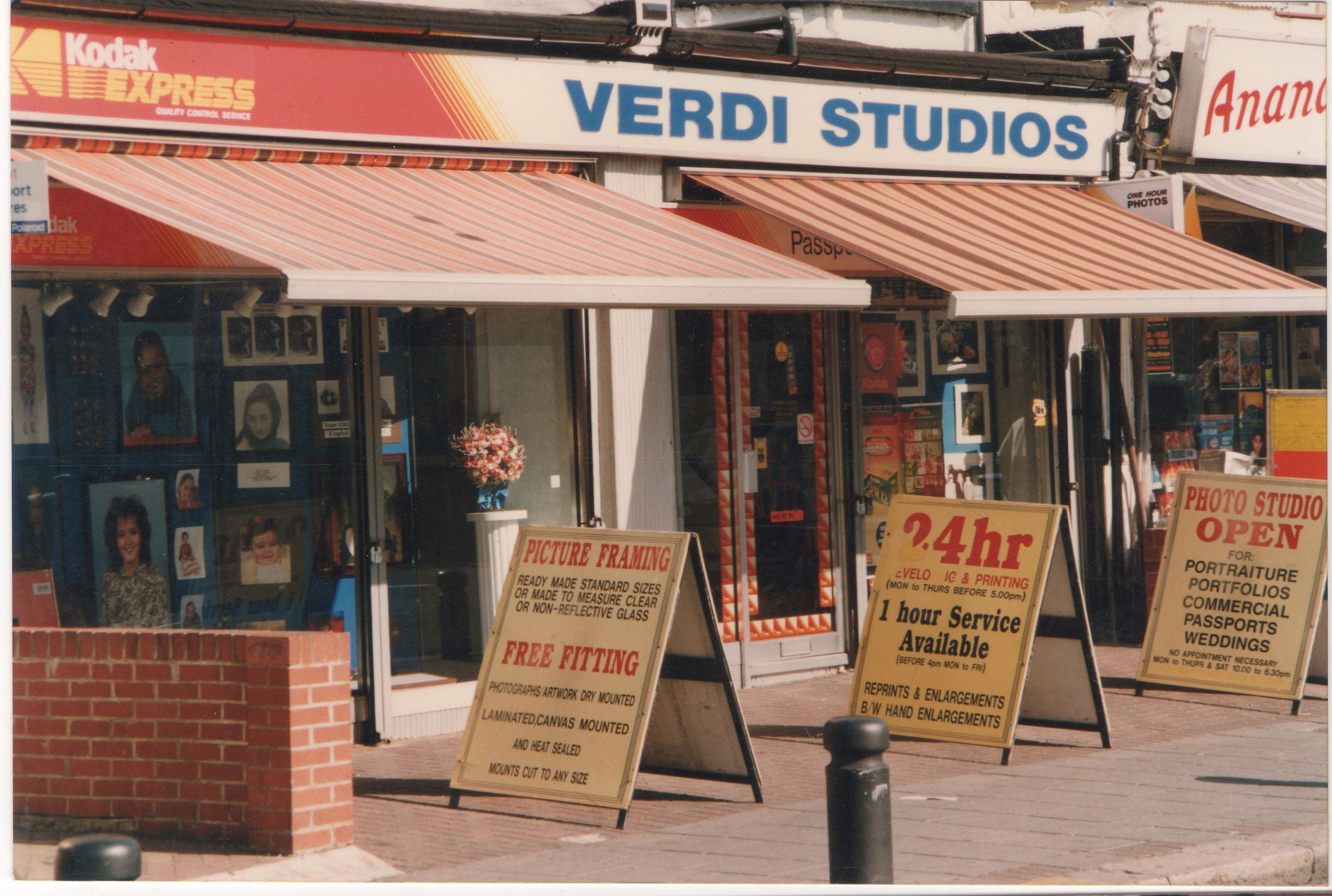
In 1976, when Verdi Studios first opened its doors in Forest Gate, photography was a very different world.

There were no smartphones, no digital cameras in every pocket and no instant previews on the back of a screen. Photography meant film, negatives, a darkroom and the anticipation of waiting to see how your photographs had turned out.
Every image mattered. Every print passed through our hands, and every photograph had a journey from the moment it was taken to the moment it reached its owner.
Nearly 50 years later, photography has changed beyond anything we could have imagined back then. We've moved through generations of cameras, watched film give way to digital, and seen photographs become something we take, share and store in their thousands.
Yet, despite all those changes, some things have remained remarkably constant.
As a third-generation family photography business, we've had the privilege of creating portraits, printing photographs, restoring family memories and framing pieces that mean the world to their owners. We've worked with generations of families, watched children grow up and welcomed 100's of the same customers back decades later.
Along the way, we've learned a few things about photography, people and the photographs we choose to keep.
Here are some of the lessons that have stayed with us.


1: The best photographs aren't always "the most perfect"
It's easy to believe that a great photograph must be technically flawless. Perfect lighting, perfect expressions, perfectly arranged hair and everyone looking directly at the camera.
But some of the most meaningful photographs are anything but perfect.
A slightly crooked smile. A child looking away from the camera. A spontaneous laugh that nobody was expecting. A photograph taken just before everyone was ready.
These are often the images that capture something real.
When we photograph families in our studio, we're not trying to turn people into something they're not. We want to capture their personalities, their relationships and those little details that make them who they are.
That's one of the reasons we don't airbrush or digitally manipulate our studio portraits. We believe there's value in looking like yourself, and that the photographs we create should reflect the people in front of the camera.
Trends come and go, but genuine expressions never really go out of fashion.
Sometimes, the photograph you initially think isn't quite right becomes the one you treasure most.
2: Photographs become more valuable as time passes
When you have a photograph taken today, it's easy to think about what it means right now.
A family portrait might simply be a nice picture to put on the wall. A photograph of your children might be a reminder of how they look at this particular age. A picture of your parents might feel like just another family photograph.
Then time passes...
Children grow up. Families change. People move away. The little faces in those photographs become adults, and the people who once stood beside us may no longer be here.
Suddenly, a photograph that once seemed ordinary becomes something extraordinary.
We've seen this time and again through our work with family portraits and old photograph restoration. People often bring us photographs that have been sitting in an album or tucked away in a drawer for years. Sometimes, they're the only photograph they have of a particular person or moment.
Their value has very little to do with technical quality or monetary worth.
It's about what they represent.


3: Film taught us the value of patience
Before digital photography, you couldn't take a photograph and immediately check whether you'd got the shot.
You loaded your film, composed your image, pressed the shutter and moved on. You had to trust your judgement.
Then came the wait...
Depending on where and how you had your film processed, it might be hours or days before you could see the results. Sometimes you'd be delighted. Sometimes you'd discover a photograph hadn't turned out quite as you'd hoped!
But that anticipation was part of the experience!
Film photography encouraged a certain thoughtfulness. Every frame had a cost, and you tended to give each photograph a little more consideration before taking it.
Digital photography has brought enormous advantages, and we wouldn't want to lose them. But we do think there's something special about the slower pace of analogue photography.
There's also a particular excitement in developing an old roll of film. You never quite know what forgotten moments might be waiting inside.

4: Technology changes, but craftsmanship still matters
For around 30 years our work involved traditional film cameras, negatives, enlargers and hands-on darkroom printing. Today, digital cameras, colour-managed workflows and modern printing technology allow us to work in ways that simply weren't possible in 1976.
We embrace those developments. Technology can make photography more flexible, precise and accessible.
But we've also learned that having better equipment doesn't automatically mean producing better photographs!
The knowledge behind the equipment matters just as much.
Understanding light, colour, composition, skin tones, paper, contrast and the way an image will look when printed is still essential. So is knowing when to make an adjustment and when to leave an image alone.
The tools may have changed, but the care that goes into our work remains at the heart of what we do.
After nearly five decades, we still believe that good results come from a combination of experience, knowledge, the right tools and taking pride in the finished product.


5: People remember how you made them feel
Photography is such a personal experience.
For some people, having their portrait taken comes naturally. For others, standing in front of a camera can feel a little uncomfortable, particularly if they're not used to it.
Children might be shy. Parents might worry about getting everyone to cooperate. Someone might be visiting us to restore a photograph that carries a great deal of emotion.
The way people are welcomed, listened to and looked after matters, too.
As a family-run business, we've always valued the personal side of what we do. We want customers to feel comfortable asking questions, discussing their ideas and telling us why a particular photograph or object matters to them.
Sometimes that means taking a little extra time to explain the printing process. Sometimes it means being honest about what can realistically be achieved with a damaged photograph. And sometimes it simply means having a conversation before we get started.
We've been fortunate to welcome generations of customers through our doors, with much of our work coming through recommendation and repeat visits.
We don't take that trust for granted.
A photograph may be what someone comes to us for, but the experience of creating, preserving or framing it is part of the memory, too.


6: Experience teaches you to value the little details
After decades in photography, it's easy to appreciate the bigger picture: the finished portrait, the beautifully printed image or the completed frame hanging on a wall.
But the final result often depends on details that most people never see...
The way a photograph is colour-corrected.
The quality of materials used.
The proportions of a mount.
The finish of a frame.
The care taken when handling an old original.
Individually, these decisions might seem small. Together, they can make a meaningful difference to the finished piece.
We've learned not to underestimate the value of doing these things properly.
It's also why we believe in being honest with customers. If a photograph isn't suitable for a particular print size, we'll explain why. If a restoration has limitations, we'll talk through them before starting. If a different framing option would work better, we'll say so.
Professional experience isn't just about knowing what can be done. It's about understanding what should be done, and helping people make informed decisions.
That approach has guided our work through decades of changing technology, and it's something we intend to carry forward.
7: Some things never change
The cameras are different. The technology is different. The way we take, share and store photographs has transformed almost beyond recognition.
But the reasons people take photographs remain familiar...
We want to remember the people we love.
We want to mark important moments.
We want to hold on to little pieces of our lives that might otherwise slip away.
And we want to be able to look back.
From our early days in Forest Gate to our base in Chadwell Heath today, we've continued to build on the same foundations: care, craftsmanship, honest advice and a genuine appreciation for photography.
We're a third-generation family business, and we're proud of the experience that comes with that history. But we're just as interested in the photographs that haven't been taken yet, the families we'll meet in the future and the memories we'll have the privilege of helping preserve.
Because, ultimately, photography has never really been just about taking a picture.
It's about what that picture means.
And if there's one thing nearly 50 years in photography has taught us, it's this:
Take the photograph. Print the photograph. Keep the photograph.
One day, you might be very glad you did.


Thank you for taking the time to read our blog. If you have any ideas, or interest about a particular topic - drop it in the comments below!
-
photography lessons, Family photography, Professional photo printing, Photo restoration, Film developing, Bespoke picture framing, Preserving old photographs, Family photography studio in Romford
Comments